Cricut Papercraft Strawberry Plant: An Embroidery Review
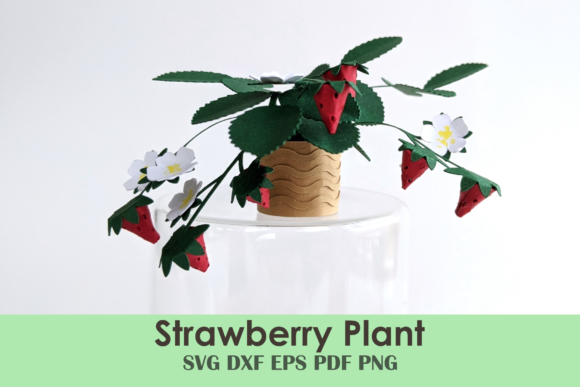
As a designer who constantly bridges the gap between digital assets and tangible stitched goods, I often evaluate files outside my primary medium to find fresh inspiration. When I first opened the Cricut Papercraft - Strawberry Plant, I wasn't looking at it as a paper template. I was analyzing its potential as a structural blueprint for a machine embroidery design. While this product is categorized as a 3D SVG for Paper Flowers, the anatomy of the file—leaves, stems, white flowers, and berries—offers a unique opportunity for mixed-media artisans and embroiderers seeking a stylized, botanical aesthetic.
My immediate impression was that this design possesses a distinct visual personality. Unlike traditional digitized embroidery files that rely on complex gradients and heavy fill stitches, this papercraft template relies on clean lines and layered shapes. For an embroidery digitizer or a crafter using pre-made files, this translates to a design that feels modern, lightweight, and intentionally graphic. It evokes a cottagecore mood without being overly dense, making it an excellent candidate for projects where fabric texture needs to breathe.
Translating Paper Layers to Stitched Texture
The true test of any design asset is how it performs in a real-world production scenario. Recently, I prepared a custom embroidered tote bag for a client’s boutique launch. They wanted something organic but not messy. The Cricut Papercraft - Strawberry Plant served as the perfect reference point. Because the original file is designed for layering paper, the separation of elements is already done for you. This is invaluable when converting concepts into an applique design or a multi-position embroidery project.
For the tote bag, I treated the strawberry shapes as appliqué pieces rather than solid fill stitch areas. This reduced the stitch count significantly, keeping the bag lightweight and flexible—a crucial factor for tote bag design success. The white flowers, which might get lost in standard embroidery, were executed with a raised satin stitch to mimic the dimensional quality of the original 3D SVG concept. The result was a handmade product that had tactile depth. Customers at the pop-up shop were drawn to it because it didn't look like a generic stock design; it had the crisp, deliberate layering of paper art translated into thread.
Ideal Applications for Commercial and Personal Projects
This design’s versatility extends far beyond tote bags. Its balanced composition makes it highly effective for various embroidery projects:
- Custom Apparel: The vertical orientation of the plant fits naturally on sweatshirt sleeves or centered on baby onesies. The lack of excessive density prevents the garment from becoming stiff.
- Kitchen Textiles: Tea towels and aprons benefit from this botanical theme. The distinct separation of leaves and berries allows for high contrast on linen fabrics.
- Nursery Decor: For pillow covers or blankets, the soft shapes are gender-neutral and whimsical, perfect for baby embroidery that avoids harsh edges.
- Etsy Listings: As a digital embroidery file adaptation, this style photographs beautifully. The clear shapes read well in thumbnail images and printable mockups, increasing click-through rates for Etsy sellers.
For small shop product lines, this design offers a cohesive branding element. It is detailed enough to stand alone as a feature but simple enough to be repeated as a border or accent pattern.
Critical Considerations for Fabric and Hoop Size
However, practical design judgment requires honesty about limitations. A file derived from papercraft logic behaves differently than one natively digitized for thread. You must approach the Cricut Papercraft - Strawberry Plant with specific technical awareness.
Hoop size selection is paramount. Because the design includes separate components like individual leaves and small white flowers, resizing it too small can cause registration issues. If you shrink the design below 4x4 inches, verify that the tiny flower centers do not turn into thread nests. Conversely, enlarging it for a large pillow cover may require adding internal detail lines to prevent the strawberries from looking like flat red blobs.
Fabric choice dictates success. On textured fabrics like terry cloth or fleece, the fine details of the stems may disappear. In these cases, use a water-soluble topping or adapt the design to use thicker running stitches. For stretchy knits used in sweatshirt embroidery, ensure your stabilizer is robust enough to support the layered appliqué without puckering. Dark fabrics present another challenge; the white flowers may require a black outline or shadow effect to maintain definition, otherwise, they risk blending into the background visually.
Professional Designer Notes for Execution
Before you commit this design to a final finished product or list it as part of your craft business inventory, follow these professional protocols:
- Test on Scrap Fabric First: Never assume the conversion from paper template to stitch file is flawless. Run a sew-out to check alignment between the leaves and berries.
- Evaluate Thread Color Contrast: Test thread colors against your specific fabric. Red strawberries on maroon fabric need outlining; green stems on olive fabric need lightening.
- Check Licensing for Commercial Use: Since this is originally a Cricut papercraft asset, you must rigorously confirm licensing terms before selling finished embroidered items or marketing it as a commercial embroidery asset. Do not assume rights transfer across mediums.
- Mockup Verification: Create both light and dark background mockups. A design that pops on white cotton may fail on navy denim.
- Inspect Small Details: Zoom in on the digital file. Ensure the white flowers have adequate underlay to prevent sinking into the fabric weave.
Enhancing Value Through Intentional Adaptation
Using the Cricut Papercraft - Strawberry Plant effectively is about respecting its origin while adapting it for thread. When executed correctly, it elevates the perceived value of your work. Buyers recognize the difference between a generic clip-art stitch-out and a thoughtfully adapted design that honors shape and form. This intentionality builds customer trust and reinforces your brand consistency.
For those creating personalized gifts or holiday embroidery, this design offers a timeless appeal that transcends trends. It pairs beautifully with monograms or custom text because its organic shape frames lettering without competing with it. Whether you are an apparel decorator looking for a fresh summer motif or a digital product seller seeking unique design assets, this template provides a solid foundation.
Ultimately, the success of this design in embroidery lies in your willingness to treat it as a starting point rather than a finished solution. By understanding the interplay between paper craft geometry and textile reality, you can transform this strawberry plant into a staple of your creative repertoire. Always prioritize testing, respect the technical constraints of your machine, and let the natural charm of the design guide your stitching decisions. The result will be a product that feels both professionally crafted and authentically handmade.